
Virtual Provider in Triage (VPIT)
Reengineering the ED Front Door
A proven front-end model that places a provider at arrival - reducing walkouts, accelerating care, and improving ED throughput.
ED performance improves measurably when VPIT is active.
85%
Fewer walkouts
35-50%
Faster door-to-provider
Across diverse
ED settings
Academic, community, and rural environments
Recover lost
ED revenue
Convert walkouts into completed encounters
Most ED delays begin
at the front door
VPIT targets the delay that drives walkouts: the time between arrival and meaningful provider evaluation.
Delayed provider evaluation
Rising walkouts and leakage
Low-acuity patients competing for beds
Limited visibility into waiting room risk

Move provider evaluation to the moment patients arrive
Eliminate front-end delay, reduce walkouts, and start care immediately.
VPIT transforms the waiting room into an active clinical environment.

Step 1 — Arrival & Triage
Patient arrives and enters immediate clinical evaluation.*
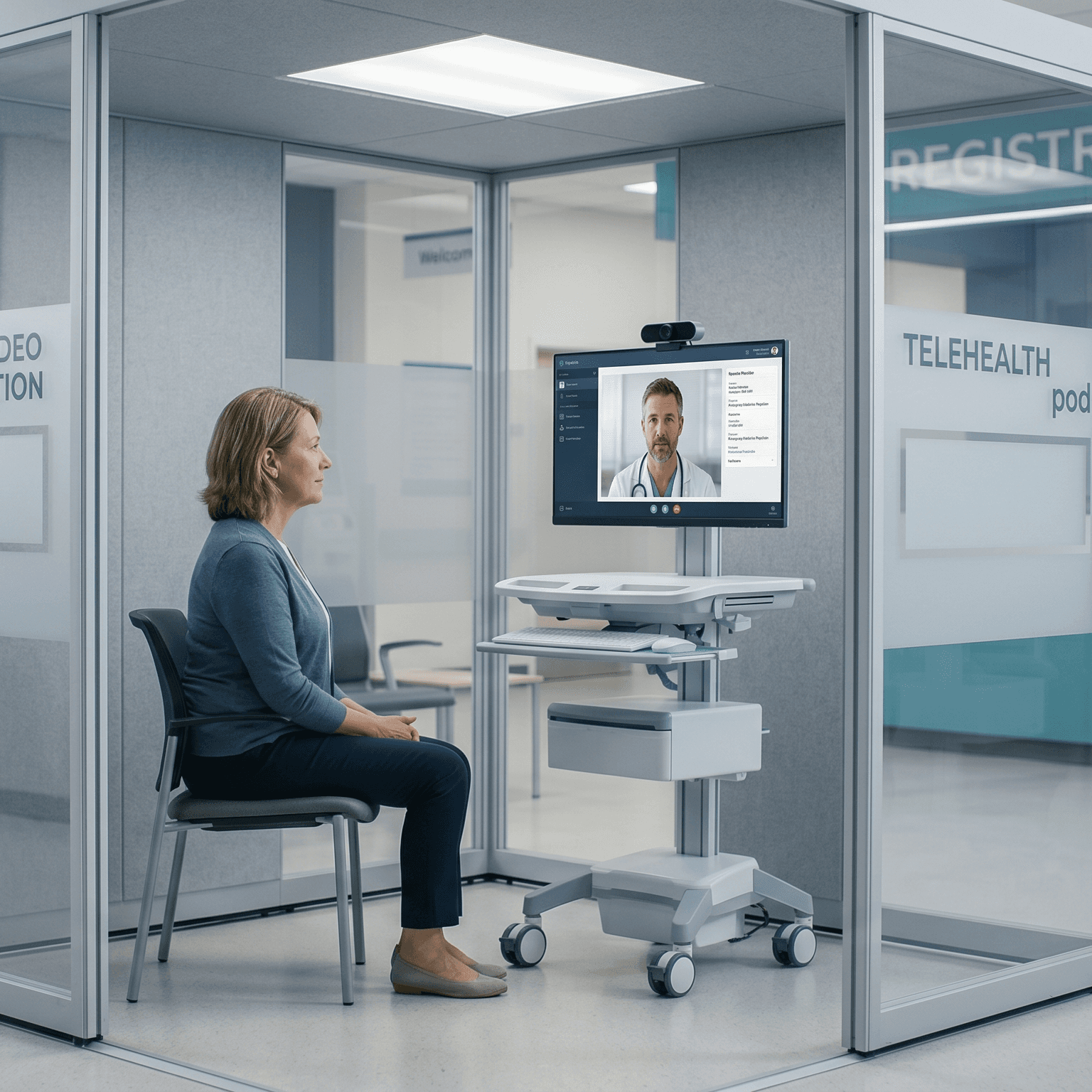
Step 2 — Virtual Provider Connects
Provider evaluation begins within minutes of arrival.
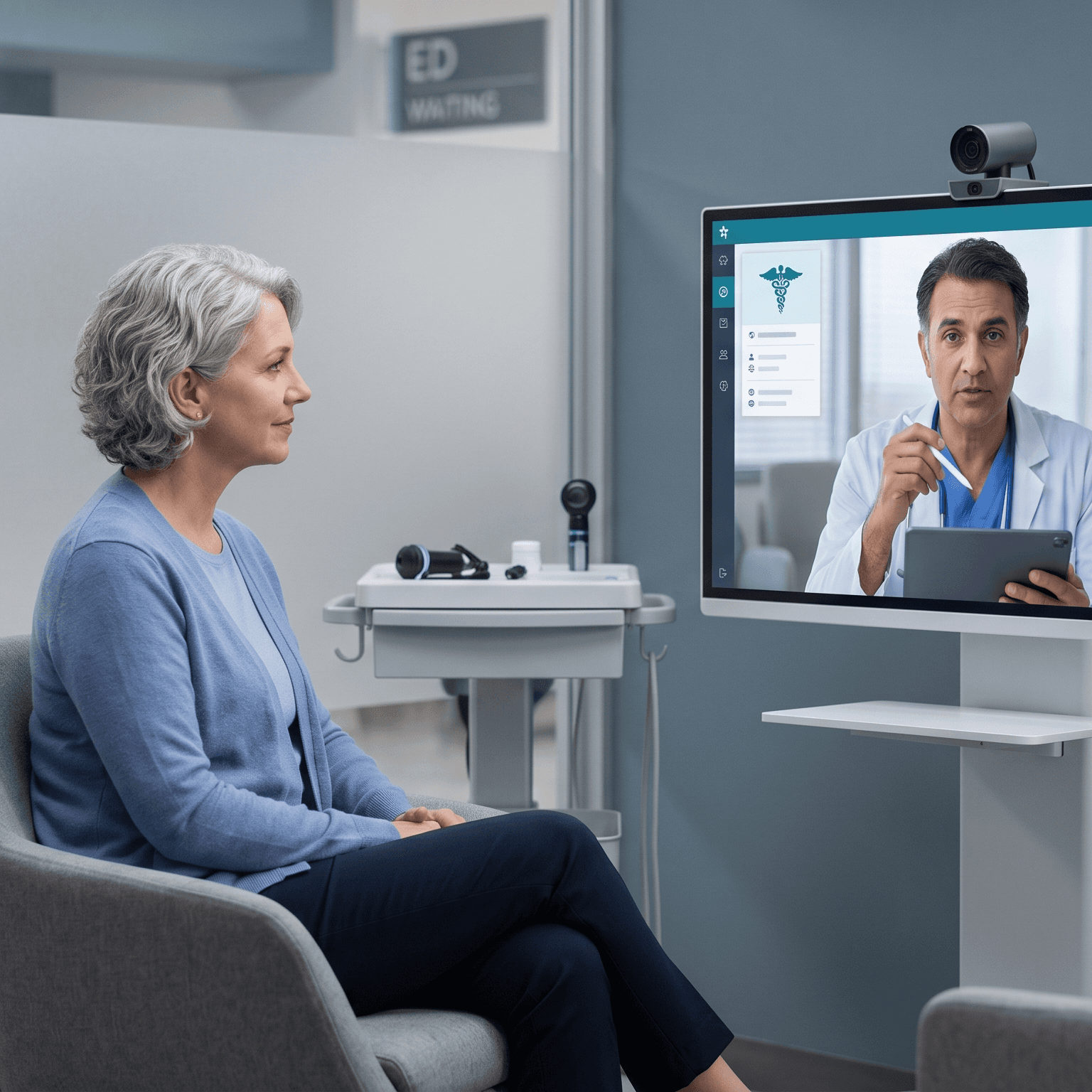
Step 3 — Medical Screening Exam
Early medical screening exam drives immediate clinical decision-making.

Step 4 — Orders & Treatment
Orders and treatment are initiated at the front of the visit — not after the wait.

Step 5 — Discharge or Escalation
Patients are discharged early or escalated with a head start on care.
*a nurse triage is not required prior to VPIT assessment
VPIT compresses wasted time at the front of the ED visit—accelerating care from the moment of arrival.
What VPIT changes operationally
Immediate provider contact
Parallelized workup initiation
Reduced walkout risk
Improved patient experience
Low-acuity throughput acceleration
Front-end risk visibility
Recovered revenue from leakage
Centralized staffing leverage
Featured In & Recognized For Innovation in Emergency Care

Becker’s Hospital Review Feature
Telehealth Program of Excellence Award

Presented and consulted with:
ACEP • AACEM • EDBA
• Intermountain Health • Christiana Care • Owensboro Health • Albany Med
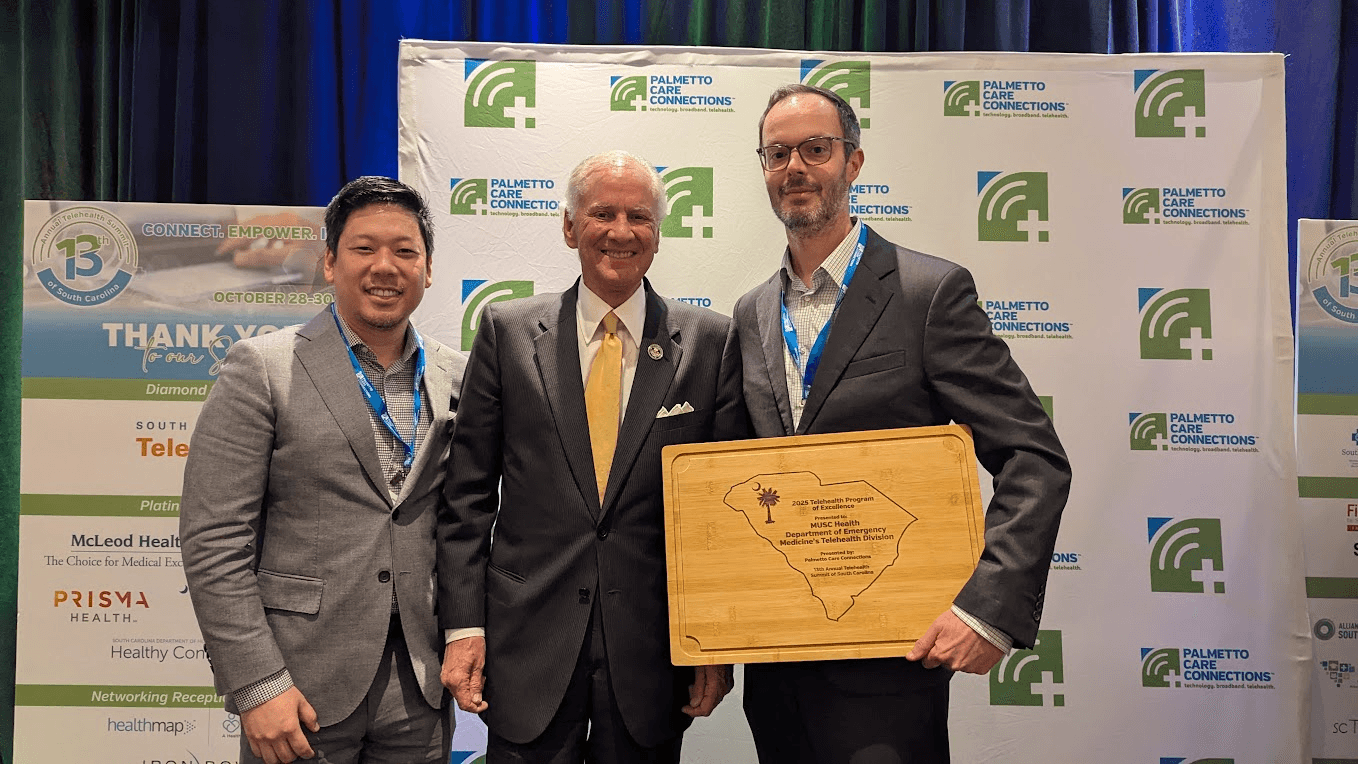
Awards & Recognition
2025 Telehealth Program of Excellence (SC Telehealth Summit)
MUSC Innovation Shark Tank Winner

Peer-reviewed Publication
Annals of Emergency Medicine: 2026.
Why VPIT works
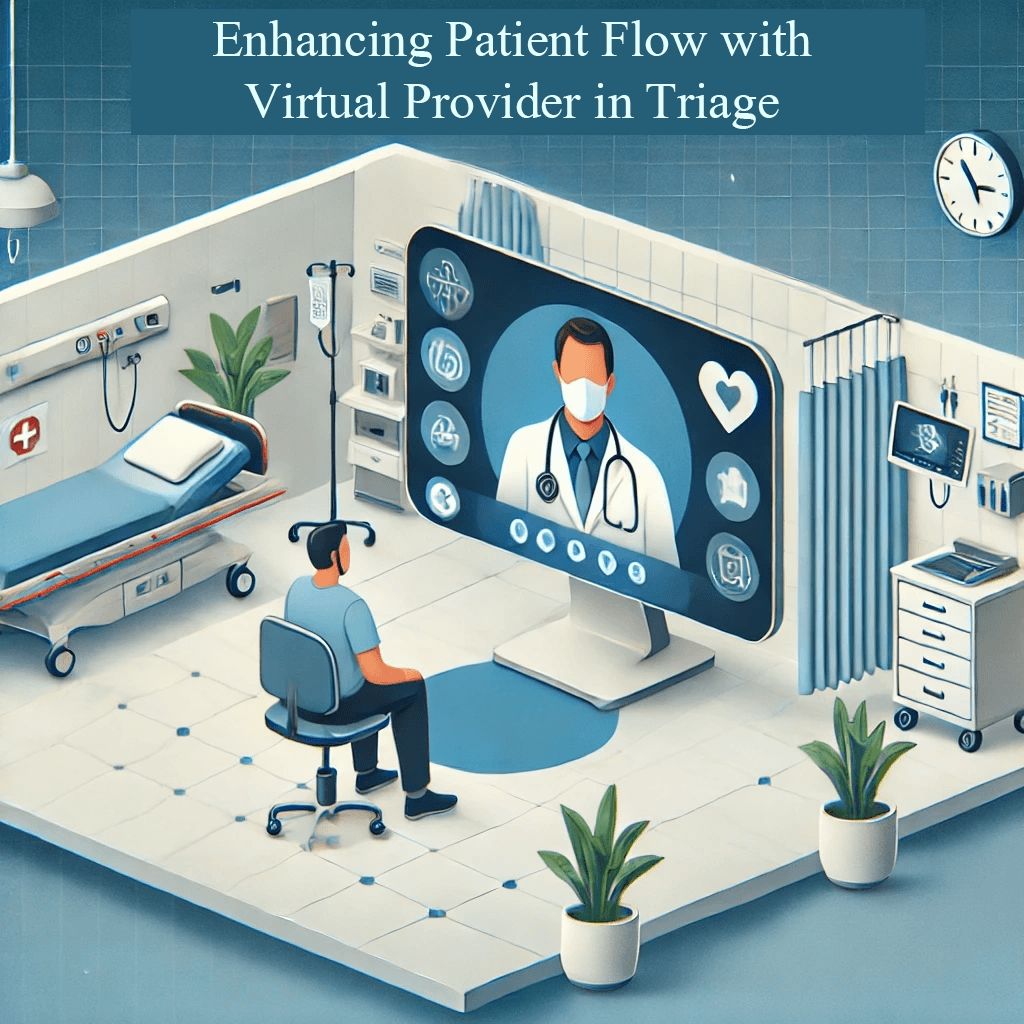
Traditional: arrival → triage → wait → provider → workup.
VPIT: arrival → provider → early workup → faster disposition.
The model removes idle time at the front of the visit and converts it into active clinical work.

Why most VPIT implementations fail
Workflow redesign. Not just software
EHR integration and documentation logic
Staffing model discipline
Escalation pathways and governance

J. Danny Park, MD FACEP

Marc Bartman, MD FACEP
Built and scaled by emergency physicians, not vendors
We designed and scaled VPIT across multiple ED environments—academic, community, and rural.
We don’t deliver concepts.
We deliver operational models that perform in real-world conditions.
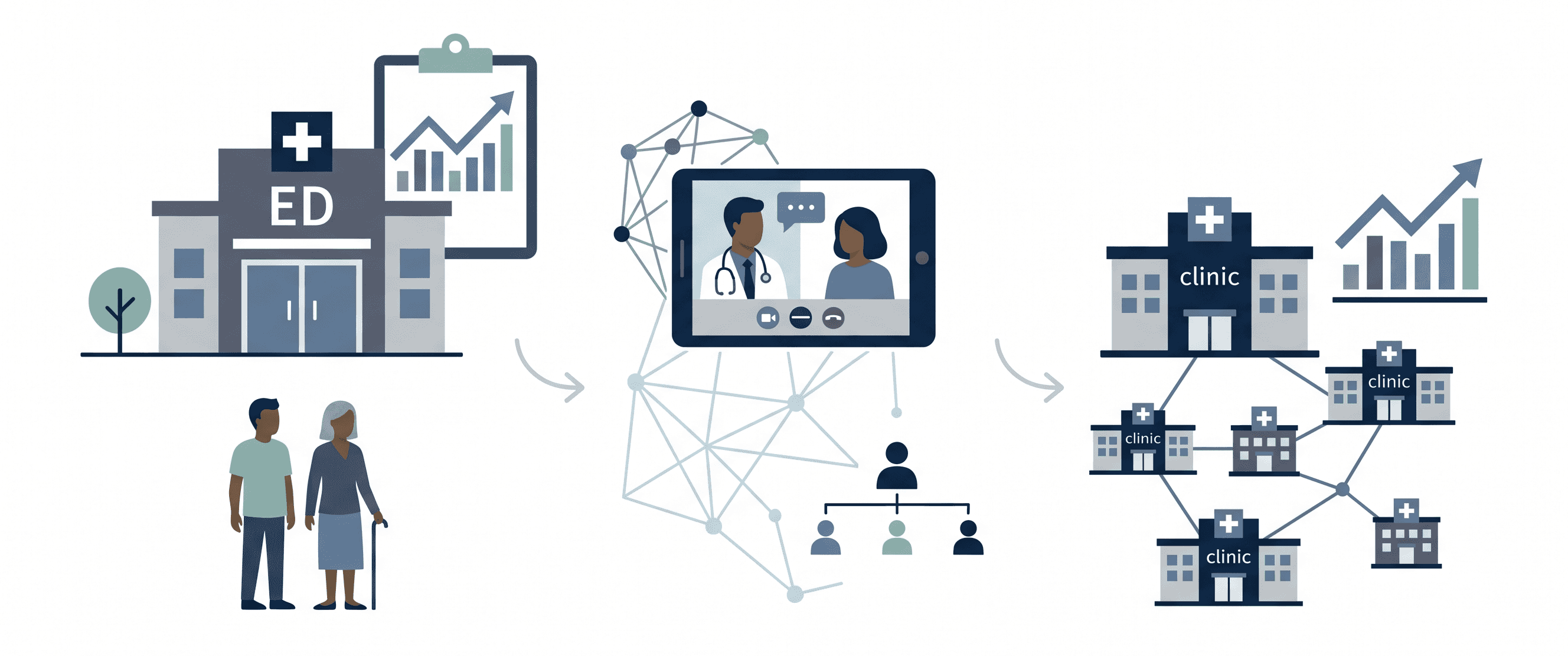
Assess
Current state analysis and feasibility assessment.
Design
Workflow, staffing, and governance optimization.
Implement and Scale
Pilot, optimize, and scale with ongoing partnership.
Frequently Asked Questions (FAQs)
What is Virtual Provider in Triage?
Virtual Provider in Triage (VPIT) integrates an experienced ED physician into the triage process via telehealth or hybrid workflows. The provider conducts real-time medical screening exams and initiates care upon patient arrival. This expedites clinical decisions and workup, regardless of physical provider presence.
How does VPIT reduce ED walkouts?
By aligning provider evaluation with arrival, VPIT eliminates bottlenecks that lead to patient abandonment. Immediate clinical engagement reduces perceived wait times and increases patient confidence in care progression, leading to fewer walkouts.
Is VPIT just a telehealth software implementation?
No. VPIT is a comprehensive clinical redesign integrating new workflows, staffing models, and process changes with the enabling role of telehealth. Success depends on operational discipline, not just technology deployment.
What ED metrics should be tracked with VPIT?
Key metrics include door-to-provider time, LWBS/LWT rate, LOS by acuity, order initiation time, patient experience, provider workload, and completed encounter volume.
What types of EDs are a good fit for VPIT?
VPIT is most useful for EDs with front-end congestion, high walkout rates, long door-to-provider times, low-acuity bottlenecks, or limited ability to add physical capacity.
Why do some VPIT programs fail?
Most failures come from treating VPIT as a video visit tool instead of an operational redesign. Weak staffing models, poor EHR integration, unclear workflows, and lack of executive metric ownership are common failure points.
Is VPIT right for your ED?
Bring VPIT to your emergency department
We help health systems assess fit, design the model, and execute implementation.
Request a Strategy Call
